
Security should be structural, not a footer claim.
Versioning adds concrete controls for identity, tenant boundaries, secrets, sessions, API credentials, audit and deployment. Formal certifications or compliance attestations should only be claimed after external assessment.
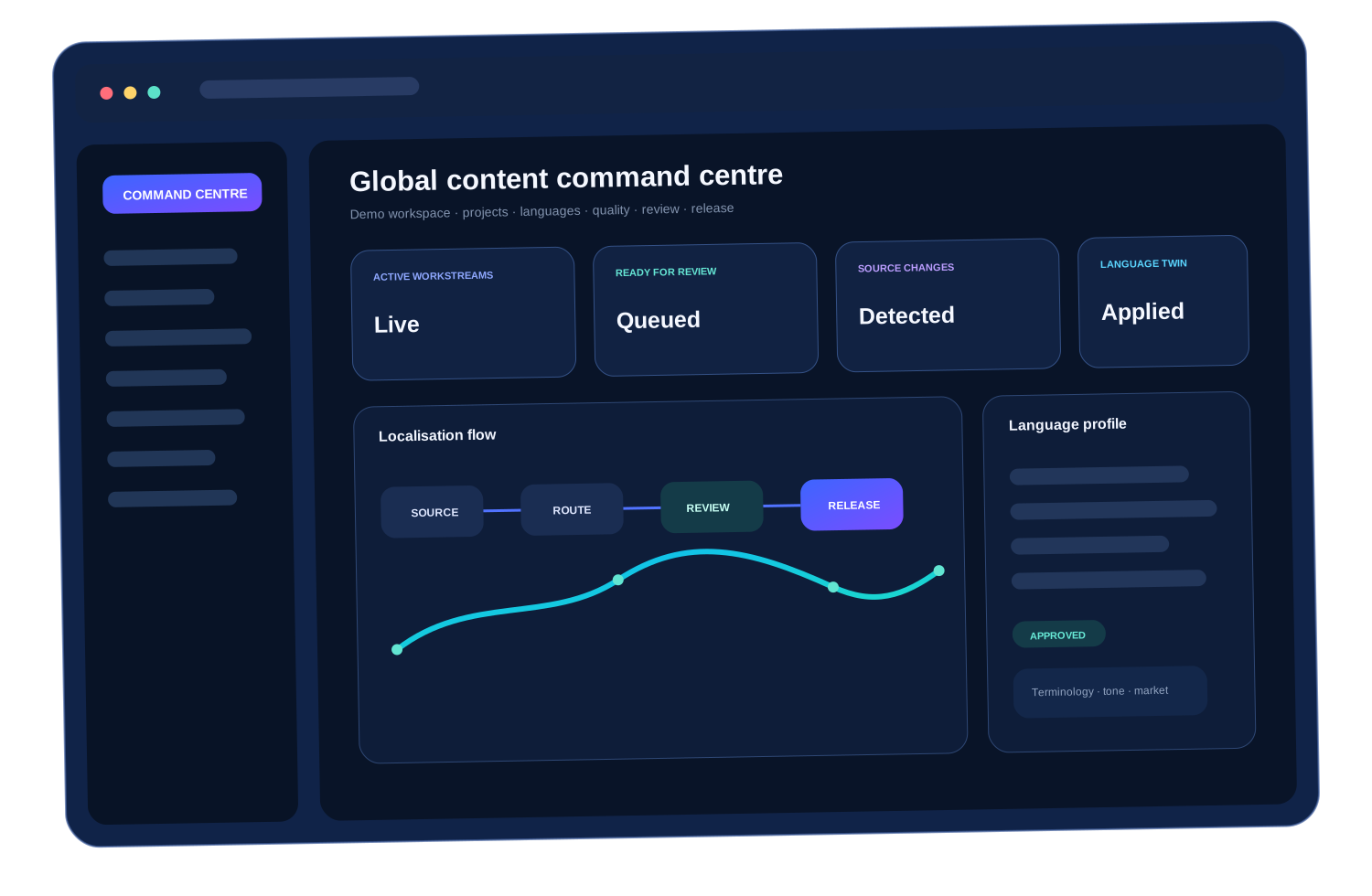
One command centre for multilingual operations.
Projects, languages, quality, review, releases and enterprise controls become part of one connected operating layer.
Identity
Password hashing, verification tokens stored as hashes, reset expiry, session regeneration and login-rate limiting.
Tenant isolation
Organisation ID is applied to platform resource queries and permission checks.
Role-based access
Administrative, project, review, developer, billing and view permissions are separated.
API secrets
API keys are never stored in plaintext after creation.
Connector secrets
Connector and webhook credentials use server-side authenticated encryption where supported.
CSRF & cookies
State-changing browser actions require CSRF tokens; session cookies are HttpOnly, Secure and SameSite.
Audit
Important actions are recorded with tenant/user context and a privacy-preserving IP hash.
Environment separation
Connector credentials track sandbox, staging or production explicitly.
Deployment secrets
Private configuration is blocked from public access and should be moved above public_html where possible.